<?xml version="1.0" encoding="utf-8"?>

<rdf:RDF
xmlns:rdf="http://www.w3.org/1999/02/22-rdf-syntax-ns#"
xmlns:dc="http://purl.org/dc/elements/1.1/"
xmlns:sy="http://purl.org/rss/1.0/modules/syndication/"
xmlns:admin="http://webns.net/mvcb/"
xmlns:cc="http://web.resource.org/cc/"
xmlns="http://purl.org/rss/1.0/">

<channel rdf:about="http://nopantsastronomy.cementhorizon.com/">
<title>No Pants Astronomy</title>
<link>http://nopantsastronomy.cementhorizon.com/</link>
<description>Exploring the cosmos with as little effort as possible.</description>
<dc:creator></dc:creator>
<dc:date>2008-07-05T17:11:10-08:00</dc:date>
<admin:generatorAgent rdf:resource="http://www.movabletype.org/?v=3.121" />


<items>
<rdf:Seq><rdf:li rdf:resource="http://nopantsastronomy.cementhorizon.com/archives/2008/07/still_shining.html" />
<rdf:li rdf:resource="http://nopantsastronomy.cementhorizon.com/archives/2008/05/phoenix_and_hir.html" />
<rdf:li rdf:resource="http://nopantsastronomy.cementhorizon.com/archives/2008/03/spacenavigating.html" />
<rdf:li rdf:resource="http://nopantsastronomy.cementhorizon.com/archives/2008/03/no_yodeling_on.html" />
<rdf:li rdf:resource="http://nopantsastronomy.cementhorizon.com/archives/2008/02/bood_moon.html" />
<rdf:li rdf:resource="http://nopantsastronomy.cementhorizon.com/archives/2008/02/jupiter_at_dawn.html" />
<rdf:li rdf:resource="http://nopantsastronomy.cementhorizon.com/archives/2008/02/saturn_and_eart_1.html" />
<rdf:li rdf:resource="http://nopantsastronomy.cementhorizon.com/archives/2008/02/the_terrible_se_2.html" />
<rdf:li rdf:resource="http://nopantsastronomy.cementhorizon.com/archives/2008/02/the_terrible_se_1.html" />
<rdf:li rdf:resource="http://nopantsastronomy.cementhorizon.com/archives/2008/02/the_terrible_se.html" />
<rdf:li rdf:resource="http://nopantsastronomy.cementhorizon.com/archives/2008/01/the_moon_a_nebu.html" />
<rdf:li rdf:resource="http://nopantsastronomy.cementhorizon.com/archives/2008/01/uncoordinated.html" />
<rdf:li rdf:resource="http://nopantsastronomy.cementhorizon.com/archives/2008/01/jiggly_mars_1.html" />
<rdf:li rdf:resource="http://nopantsastronomy.cementhorizon.com/archives/2007/12/spaaaaaaaaace.html" />
</rdf:Seq>
</items>

</channel>

<item rdf:about="http://nopantsastronomy.cementhorizon.com/archives/2008/07/still_shining.html">
<title>Still Shining</title>
<link>http://nopantsastronomy.cementhorizon.com/archives/2008/07/still_shining.html</link>
<description><![CDATA[<p>Just wanted to let my enormous audience know that I have abandoned neither this blog nor my interest in astronomy. Rather, the lack of recent activity is attributable principally to the fact that I'm in the middle of an interstate relocation. I'll be moving to an area with darker skies and closer proximity to the guy who write the Bad Astronomy blog, both of which should only enhance my astroblogging experience. Unfortunately in the meantime my telescope has been lovingly boxed up and will remain so for several weeks as my wife and I look for a permanent home in our new state. Until then, Galaxy willing, I'll be posting about various random bits of space-related news as events warrant. </p>

<p>(Types on a Blackberry due to premature cancellation of home Internet service.)</p>]]></description>
<dc:subject></dc:subject>
<dc:creator>hb</dc:creator>
<dc:date>2008-07-05T17:11:10-08:00</dc:date>
</item>
<item rdf:about="http://nopantsastronomy.cementhorizon.com/archives/2008/05/phoenix_and_hir.html">
<title>Phoenix and HiRISE Are Friends</title>
<link>http://nopantsastronomy.cementhorizon.com/archives/2008/05/phoenix_and_hir.html</link>
<description><![CDATA[<p><html><br />
<body></p>

<p>Stargazing has been difficult for a while, mainly due to the weather.  There were a number of clear nights in winter when I could see all kinds of cool crap with the telescope, but as the air has gotten warmer the night skies have lost their clarity, and I'm starting to realize how difficult it is to be a backyard astronomer in a large metropolitan area with lots of ambient moisture.

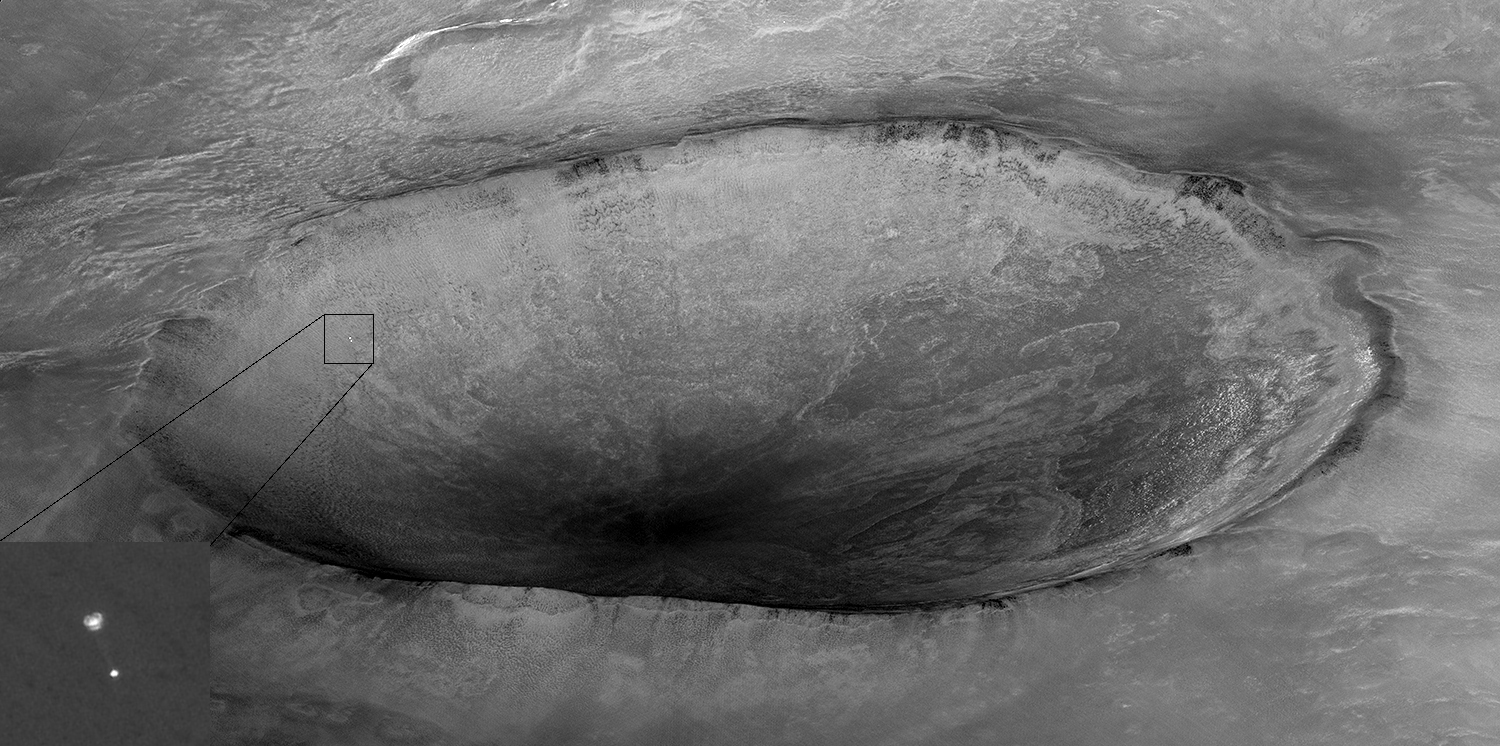
<p>Fortunately, there are other telescopes out there without such difficulties.  Consider, for example, HiRISE, the big fancy telescope that takes really cool pictures of Mars.  The astroblogger community is currently going positively ape over this image:

<p><a href="http://nopantsastronomy.cementhorizon.com/phoenixlanding.jpg"><img alt="phoenixlanding.jpg" src="http://nopantsastronomy.cementhorizon.com/phoenixlanding-thumb.jpg" width="375" height="186" /></a>

<p>(Click for big.)  What you're seeing there is an image that HiRISE took of the Phoenix probe landing near a ten-kilometer crater on Mars (according to the <a href="http://hirise.lpl.arizona.edu/phoenix-descent.php">HiRISE site</a>, the probe isn't actually landing <i>in</i> the crater, but about twenty kilometers in front of it).

<p>An representative example of blogger gushing can be found on <a href="http://www.badastronomy.com/bablog/2008/05/26/best-image-ever/">Bad Astronomy</a> (using my absolute least favorite formular for a blog post title):

<p><blockquote>Think on this, and think on it carefully: you are seeing a manmade object falling gracefully and with intent to the surface of an alien world, as seen by another manmade object already circling that world, both of them acting robotically, and both of them hundreds of million of kilometers away.</blockquote>

<p>Maybe I was born too far into the Space Age to get this worked up over the fact that the extremely expensive robots we send into space are able to take pictures of each other, but hey, whatever catches your virus.
<br><br>
</body>
</html>]]></description>
<dc:subject></dc:subject>
<dc:creator>hb</dc:creator>
<dc:date>2008-05-28T09:25:04-08:00</dc:date>
</item>
<item rdf:about="http://nopantsastronomy.cementhorizon.com/archives/2008/03/spacenavigating.html">
<title>Space-Navigating the Spring Sky</title>
<link>http://nopantsastronomy.cementhorizon.com/archives/2008/03/spacenavigating.html</link>
<description><![CDATA[<p>Something that I like to think I was always aware of on some level but never thought too much about until I started backyard starfucking is the fact that the sky changes over the course of the year.  As such, after the recent extended bad weather cleared up and I decided to take to the skies once more, I saw that my familiar winter sky had given way to a brand new spring sky.</p>

<p>Throughout winter, Orion dominated the sky, looming overhead and acting as a sort of compass toward the other major sky-landmarks.  Once I spotted Orion it was generally a simple matter to find the nearby constellations of Taurus and Gemini, and Orion's imaginary arrow points at the Pleides, which were almost always directly overhead.</p>

<p>Last night I decided to explore the spring sky and see if I could make some new dot-and-line friends.  To help me on my adventure I brought along my <a href="http://gizmodo.com/gadgets/second-star-to-the-right/space-navigator-star-locator-for-astronomers-in-a-hurry-274739.php">Space Navigator</a>, a Christmas gift from my inlaws.  This device is basically a hand-held version of the onboard computer on my first telescope, except that it actually functions properly.  The operation is sort of difficult to explain, but basically, you punch in your longitude, latitude, date, and time, and it knows what's in your sky.  It gives you a list of visible objects and then helps you find them through a combination of text and interchangeable star maps.</p>

<p>What's even niftier to my mind is the fact that the Space Navigator also performs this function in reverse.  If you tell it what direction you're facing and how high in the sky you're looking, it can tell you what you're looking at.  Or, more precisely, it will tell you what map to look at to find what you're looking at.</p>

<p>So, with the help of the Space Navigator, I discovered a few things about the spring sky in my neck of the woods.  First, there were a few things I was able to figure out on my own -- Orion (and his friends) are now hanging lower in the sky than they were a few months ago, and I could barely find the damn Pleiades (this was due mainly to light pollution and moisture in the air, but still striking -- when the seven sisters were directly overhead they were often immune from these effects closer to the horizon).  Also, Ursa Major (the Big Dipper) has been clearly visible in the northern sky for several weeks.</p>

<p>In addition to these two, admittedly pretty easy to spot and recognize, constellations, I found that <a href="http://en.wikipedia.org/wiki/Leo_%28constellation%29">Leo</a> has taken over Orion's post as the dominant figure overhead, while <a href="http://en.wikipedia.org/wiki/Auriga_%28constellation%29">Auriga</a> is also making quite an appearance.  Right near Auriga is <a href="http://en.wikipedia.org/wiki/Camelopardalis">Camelopardalis</a>, the Space Giraffe (seriously, follow the link), which I think should be designated the official imaginary sky object of the Heuristic Squelch.  Other constellations that I don't have the energy to link to were Lynx, Perseus (both near Auriga), and Virgo.  Sirius is still the brightest star in the sky but it was so close to the horizon that I didn't immediately recognize it.</p>

<p>Also, continuing the saga of my quest to find Andromeda, I had high hopes that the Space Navigator would be my key to trapping the elusive galaxy once and for all, since in addition to stars and planets the Space Navigator has a full database of deep space objects.  Unfortanately the deep space objects are listed only by number, not name, and my dumb ass didn't know that Andromeda is M31.  Next time, perhaps.</p>]]></description>
<dc:subject></dc:subject>
<dc:creator>hb</dc:creator>
<dc:date>2008-03-31T22:58:12-08:00</dc:date>
</item>
<item rdf:about="http://nopantsastronomy.cementhorizon.com/archives/2008/03/no_yodeling_on.html">
<title>No Yodeling on Mars</title>
<link>http://nopantsastronomy.cementhorizon.com/archives/2008/03/no_yodeling_on.html</link>
<description><![CDATA[<p><img alt="marsavalanche.jpg" src="http://nopantsastronomy.cementhorizon.com/marsavalanche.jpg" width="500" height="333" /></p>

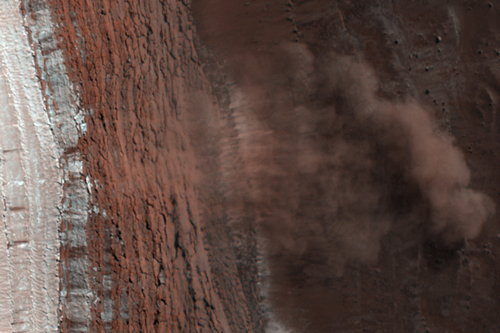
<p><a href="http://www.badastronomy.com/bablog/2008/03/03/breaking-martian-avalanche-caught-in-the-act/">Bad Astronomy Blog</a> is reporting on a nifty image from<a href="http://hirise.lpl.arizona.edu/">HiRISE</a>: An action shot from Mars, showing an avalanche in progress.  I concur with BAB that this is, indeed, very cool.  Our fellow dumb planets aren't just inert lumps of rock -- they have their own sounds, smells, accelerations due to gravities, good days, and bad days.  It's just strange to think that no one is experiencing these things in person on a day to day basis.]]></description>
<dc:subject></dc:subject>
<dc:creator>hb</dc:creator>
<dc:date>2008-03-03T15:50:28-08:00</dc:date>
</item>
<item rdf:about="http://nopantsastronomy.cementhorizon.com/archives/2008/02/bood_moon.html">
<title>Blood Moon</title>
<link>http://nopantsastronomy.cementhorizon.com/archives/2008/02/bood_moon.html</link>
<description><![CDATA[<p>In response to Michele's comment from the previous post, I did do some nominal eyeballing of the lunar eclipse the other night, but nothing major given the uncooperative weather.</p>

<p>I caught a glimpse of the red moon peeking over a cloud mass as I got on the freeway coming home from work.  It looked really cool, but it was behind me for the duration of the drive home so I didn't get a chance to look at it.  By the time I got home it was just a faint red glow behind the cloud cover.</p>

<p>Dr. M and I went out to dinner, and on our way back the red moon was clearly visible, though the clouds were returning by the time we got home.  I lingered outside wondering if I should set up the telescope, and at the moment the thought occurred to me a cloudy mist started forming in front of the moon, as if to tell me to go back inside and play on the Internet instead.  And so I did.</p>

<p>There are, of course, tons of cool pictures of the eclipse available online, including <a href="http://antwrp.gsfc.nasa.gov/apod/ap080222.html">this one</a> from APOD in which the moon is shown with two of its sky-friends.</p>]]></description>
<dc:subject></dc:subject>
<dc:creator>hb</dc:creator>
<dc:date>2008-02-22T10:52:20-08:00</dc:date>
</item>
<item rdf:about="http://nopantsastronomy.cementhorizon.com/archives/2008/02/jupiter_at_dawn.html">
<title>Jupiter at Dawn</title>
<link>http://nopantsastronomy.cementhorizon.com/archives/2008/02/jupiter_at_dawn.html</link>
<description><![CDATA[<p>I got up this morning to take a walk before work, but when I got outside and saw Jupiter hanging high in the eastern sky, I decided to stop putting off my pre-dawn stargazing (or planetgazing), and I went back inside to get the telescope.</p>

<p>As expected, Jupiter surpassed Saturn in terms of viewing awesomeness.  I wasn't able to see the red spot, but I could clearly make out stripes, and even in the relatively bright dawn sky I could see four moons.  Three of the moons formed a straight line relatively close to the planet, with one one the left and two on the right.  A fourth moon was hanging farther off up and to the left.  I suspect that if and when I observe Jupiter in a dark night sky I'll be able to see even more hot moon action.</p>

<p>One thing I noticed was that, particularly with the higher-powered eyepiece, it was just about impossible to get the planet fully into focus.  I quickly realized that this had nothing to do with the optics of the telescope.  Even when I took my hand off the focus knob, the sharpness of the image would fluctuate.  Looking more closely, I could see what looked like those air perturbations you see over roads on hot days (only, in this case, small enough to be visible against a tiny dot in the sky).  I imagine that the changing temperature of the morning atmosphere was creating all kinds of air turbulance, which was affecting the clarity of the image.  Again, this is a problem that will hopefully be somewhat abated by viewing in a temperature-stabilized night sky.</p>

<p>As I was closing down the operation a woman who was walking her dog came along and asked me what I was looking at (in a friendly, not accusatory, way).  I resisted the urge to say "Your apartment," and instead explained that I was observing Jupiter and pointed out the fading bright spot in the sky (the sun was creeping over the horizon at this point so the planet was becoming very hard to see).  As we spoke, her dog investigated my backpack, and after she was gone I saw that he had drooled all over it.  I'm sure the cats will be excited about that.</p>]]></description>
<dc:subject></dc:subject>
<dc:creator>hb</dc:creator>
<dc:date>2008-02-15T08:26:51-08:00</dc:date>
</item>
<item rdf:about="http://nopantsastronomy.cementhorizon.com/archives/2008/02/saturn_and_eart_1.html">
<title>Saturn and Earthshine</title>
<link>http://nopantsastronomy.cementhorizon.com/archives/2008/02/saturn_and_eart_1.html</link>
<description><![CDATA[<p>My friend Tom came over last night to cash in a long-standing promise to let him look at cool shit through the telescope.  I was a little nervous about the prospect at first, since I was worried that all we'd be able to see was white dots, and he would have jackassed all the way down here for nothing.  Fortunately, the evening delivered for both of us.</p>

<p>The plan was to look for (1) the Moon, (2) Saturn, (3) the Orion Nebula, and (4) the Andromeda Galaxy.  I was dubious about Saturn since the star chart had it low on the horizon and there would therefore be a lot of crap in the way.</p>

<p>The Moon was, not surprisingly, easy to find.  This was my first experience observing a crescent moon through the telescope, and I was pleasantly surprised to see <a href="http://en.wikipedia.org/wiki/Earthshine">Earthshine</a> in the dark region.  Even with the lower-powered eyepiece we could easily make out the features of the dark portion of the Moon, and viewing the region alongside the brilliance of the illuminated version was exceptionally neat.</p>

<p>After we had our fill of the Moon, I spotted a small yellow dot in the  Eastern sky that I guardedly speculated might be the ringed planet.  I swiveled the scope around (I'm getting the hang of the stupid non-intuitive rotational axes), centered the dot in the eyepiece, and checked it out using the lower-powered eyepiece without the Barlow lens.  I could clearly see little bulges on either side of the dot.  This, at last, was Saturn.</p>

<p>I installed the Barlow lens, and was actually able to see the dark space <i>between</i> the rings and the planet.  Tom, with his natural 20/20 vision, was able to spot one of Saturn's moons about two or three Saturn-lengths to one side.  We later theorized that a fainter speck closer to the planet was a second Moon.</p>

<p>I called Dr. M, who came to join us, and was also very excited.  I switched out the eyepiece for the more powerful one, and at this magnification we were able to make out the top curve of the ring in front of the planet.  It was also quite a challenge to get the brighter moon into the same field of vision as the planet, since the high-powered eyepiece focuses on such a tiny portion of the sky and the moon was so far to one side.</p>

<p>The three of us took turns ogling Saturn at the highest magnification power.  The high power created two challenges, in addition to the problem of getting the moon into view: First, it was difficult to focus, not least because the three of us each have different eyesights (I finally broke down and kept my glasses on while observing, prompting Dr. M to comment that I looked like a stereotypical 1950s scientist).  Second, the Earth's rotation creates a very high apparent speed at that magnification, so we had to constantly turn the fine adjustment knob to keep the planet in view as we watched it drift from left to right.  For the first time, I wished that I had sprung for the motor.</p>

<p>My initial instinct was to declare this my most exciting viewing night, since it was the first time I was able to see discrete features on another planet.  I won't commit to a decision as to whether the rings of Saturn are cooler than the Orion Nebula or the fake Pleiades nebula, but I will say that the Saturn experience makes me very eager to get Jupiter into the scope's sights.  Jupiter is both larger and closer than Saturn, so I should be able to get quite an eyeful when I finally get up the energy to engage in pre-dawn observing (Jupiter has been hanging around the morning sky recently), or when Jupiter makes its way into the evening sky.  For now, hey, I saw Saturn.</p>]]></description>
<dc:subject></dc:subject>
<dc:creator>hb</dc:creator>
<dc:date>2008-02-11T08:36:41-08:00</dc:date>
</item>
<item rdf:about="http://nopantsastronomy.cementhorizon.com/archives/2008/02/the_terrible_se_2.html">
<title>The Terrible Secrets of Space, Part Three: Our Dumb Solar System</title>
<link>http://nopantsastronomy.cementhorizon.com/archives/2008/02/the_terrible_se_2.html</link>
<description><![CDATA[<p>For Part Three of TSOS, I'll be eschewing the theoretical jimmity jam and presenting some or my favorite fun facts about the other members of our own solar system.  So here we go.</p>

<p><img src="http://nopantsastronomy.cementhorizon.com/mercury.jpg"><br />
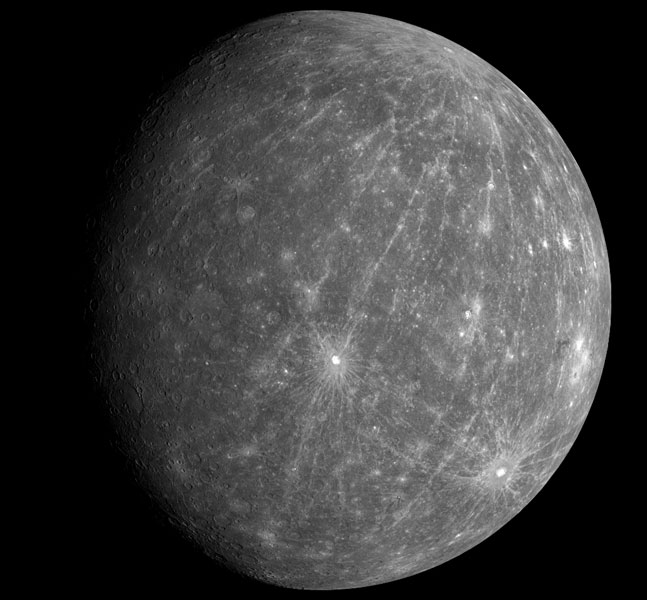
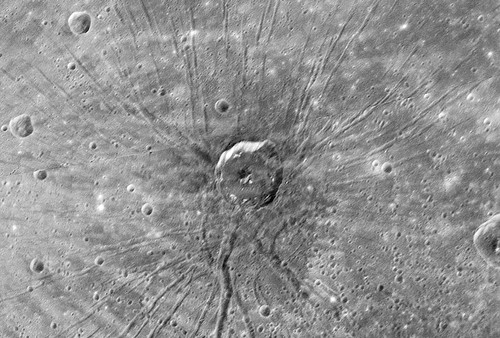
<b>Mercury, the sun's little punk.</b>  The solar system's littlest planet, and the one closest to our sun.  Like many bars in San Francisco, Mercury has no atmosphere.  With no atmosphere to hold the sun's heat, the surface temperature of Mercury's daytime and nighttime halves differs by about six hundred degrees.  The NASA <a href="http://messenger.jhuapl.edu/">MESSENGER</a> space craft recently buzzed Mercury and sent back a bunch of pictures that make the planet look like a larger version of Earth's moon, except with massive spider-like surface features that were obviously built by intelligent life forms.</p>

<p><img src="http://nopantsastronomy.cementhorizon.com/venus.jpg"><br />
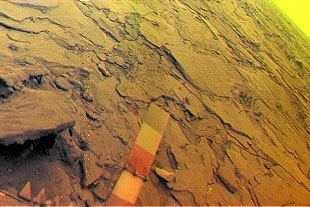
<b>Venus (hates you).</b>  Venus is surrounded by an extremely thick atmosphere that makes the planet very boring to look at from the outside.  The only interesting thing about observing Venus is that it goes through phases, like the moon.  The surface of Venus is marked by extremely high temperature and pressure, and as a result the planet has destroyed several landing probes sent there to bother it.  Venus is also the setting of Ray Bradbury's <i>All Summer in a Day</i>, which is a very dumb story about horrible little children.  Venus is also the setting of one of H.P. Lovecraft's only true science fiction stories -- <i>In the Walls of Eryx</i> -- which, not surprisingly, is scary as hell.</p>

<p><img src="http://nopantsastronomy.cementhorizon.com/mars.jpg"><br />
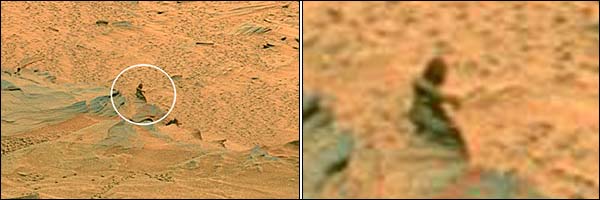
<b>Mars, the cradle of civilization.</b>  Mars is confirmed to have been the home to several ancient races of intelligent life, whose relics and monuments have been painstakingly catalogued by NASA scientists interpreting data from various robotic probes.  Today, Mars is the home of at least one <a href="http://www.foxnews.com/story/0,2933,324800,00.html">sasquatch</a>.  This creature poses an immediate threat to human civilization, and as a result NASA has announced that all future robotic missions to the red planet will be heavily armed.</p>

<p><img src="http://nopantsastronomy.cementhorizon.com/jupiter.jpg"><br />
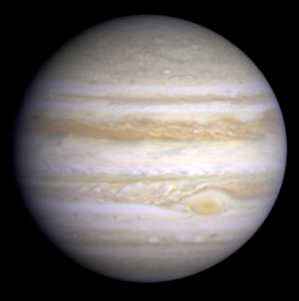
<b>Jupiter, fat and fabulous.</b>  Jack Handy once said that Jupiter should be considered an enemy planet, regardless of whether we ever find life on it.  Jack Handy is a fool.  To the contrary, Jupiter is the Earth's protective big brother.  Responsible for 90% of the non-solar mass of the solar system, Jupiter's gravitational field protects the inner planets from marauding asteroids and other undesirables that might want to enter our solar system, generally by deflecting them into the nether reaches of space.  This phenomenon has led some scientists to conclude that a Jupiter-like planet is a requirement for life on other planets -- i.e., a planet can only have advanced life on it if it shares its solar system with a giant planet with protective gravity.  Jupiter also has a dickload of Moons, including <a href="http://en.wikipedia.org/wiki/Europa_%28moon%29">Europa</a>, which closely resembles the icy planet of Hoth.</p>

<p><img src="http://nopantsastronomy.cementhorizon.com/saturn.jpg"><br />
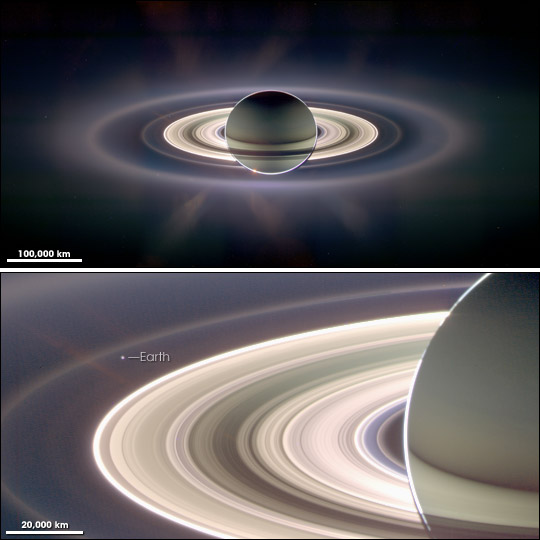
<b>Saturn, the one with the rings.</b>  RINGS!  RINGS!  MOTHERFUCKING RINGS!  JESUS CHRIST, WILL YOU LOOK AT THOSE RINGS!  Most people associate Saturn with rings.  Saturn has rings.</p>

<p><img src="http://nopantsastronomy.cementhorizon.com/uranus.jpg"><br />
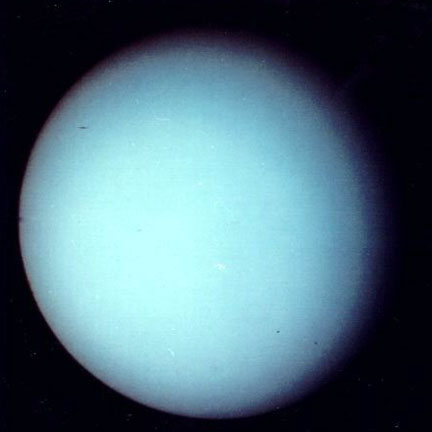
<b>Uranus, the sideways planet.</b>  The third of the outer gassy giants, Uranus is best known as source material for countless bad jokes told by young boys.  <i>See, e.g., E.T.</i>  The coolest thing about Uranus is that it's the only planet with a sideways rotation.  While all other planets "spin" as they orbit the sun, Uranus "rolls."  It also has the word "anus" right there in its name.</p>

<p><img src="http://nopantsastronomy.cementhorizon.com/neptune.jpg"><br />
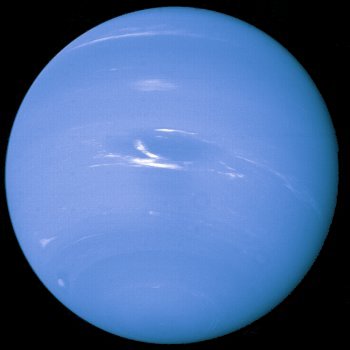
<b>Neptune, Hi, I'm on Neptune.</b>  Neptune is another gassy, featureless planet.  It is not the largest, the prettiest, or the sideways-est.  Until recently, its main claim to fame was the fact that it was sometimes the farthest planet from the sun due to Pluto's weird orbit.  Now that Pluto isn't a planet anymore, Neptune is the farthest plan from the sun <i>all the time</i>.  I don't know anything else about Neptune.</p>]]></description>
<dc:subject></dc:subject>
<dc:creator>hb</dc:creator>
<dc:date>2008-02-06T18:02:39-08:00</dc:date>
</item>
<item rdf:about="http://nopantsastronomy.cementhorizon.com/archives/2008/02/the_terrible_se_1.html">
<title>The Terrible Secrets of Space, Part Two: Our Bubblegum Universe</title>
<link>http://nopantsastronomy.cementhorizon.com/archives/2008/02/the_terrible_se_1.html</link>
<description><![CDATA[<p>For the second installment of the TSOS series, I'll be discussing the freakiness of space itself, as opposed to the stuff in space.</p>

<p>Most people know that the universe is expanding.  What people might not realize is that the universe is not expanding into empty space.  Rather, space <i>itself</i> is expanding.  The universe is like the two-dimesional surface of a bubble being inflated -- one minute there's X amount of surface; the next minute there's X + Y amount of surface.  Space works the same way -- just expand the two-dimensional surface to a three-dimensional surface.</p>

<p>This has several important ramifications.  First off, cosmic objects are generally moving away from each other.  The movement of galaxies relevant to each other is a function not only of the peculiar velocity of each galaxy relative to space, but also of the rate at which space itself is expanding between the galaxies.  It's like two bugs standing on a bubble, moving away from each other because the bubble is getting bigger.</p>

<p>This also means that the universe has a <a href="http://en.wikipedia.org/wiki/Shape_of_the_universe">shape</a>.  And depending on that shape, space could be non-Euclidean, meaning that parallel lines actually diverge or converge.  In a closed universe, in which parallel lines converge, light also travels in a circle.  This means that, theoretically, if you observe an extremely old object in one direction, you should be able to turn around and see the exact same thing in the opposite direction.  I believe (and someone may correct me), that the most current observations indicate that we actually live in a flat (Euclidean) universe, where cool stuff like this doesn't happen.  But still.</p>

<p>Finally, it means that there's nothing "outside" the universe.  Or at least nothing accessible by our current understanding of things.  Time and space exist within the universe, not outside it.  This, of course, brings up all kinds of unanswerable questions about what happened before the Big Bang, the existence of multiple universes, and so on, but for now this is a fun thing to toss out at cocktail parties.</p>]]></description>
<dc:subject></dc:subject>
<dc:creator>hb</dc:creator>
<dc:date>2008-02-06T08:33:14-08:00</dc:date>
</item>
<item rdf:about="http://nopantsastronomy.cementhorizon.com/archives/2008/02/the_terrible_se.html">
<title>The Terrible Secrets of Space, Part One: Let&apos;s Get Small</title>
<link>http://nopantsastronomy.cementhorizon.com/archives/2008/02/the_terrible_se.html</link>
<description><![CDATA[<p>In honor of <a href="http://www.justscience.net/">Just Science 2008</a>, I'll be posting a series this week called "The Terrible Secrets of Space" (named for <a href="http://youtube.com/watch?v=HgeE93nDJew">this</a>).  Not everything (or anything, perhaps) I discuss in these posts will qualify as cutting-edge science.  Rather, I'll be posting about some of the freakier things about the universe and its various bits and pieces, and the stuff that motivates my interest in backyard astronomy.  I figure it gels well with the nascent nature of this here blog.</p>

<p>We'll start off with a relatively straightforward, and hopefully none-too-boring, perspective on how small we are in the overall shootin' match.</p>

<p>First up, we have a highly simplified Total Perspective Vortex:</p>

<p><object width="425" height="355"><param name="movie" value="http://www.youtube.com/v/z6yHKE9dg0g&rel=1"></param><param name="wmode" value="transparent"></param><embed src="http://www.youtube.com/v/z6yHKE9dg0g&rel=1" type="application/x-shockwave-flash" wmode="transparent" width="425" height="355"></embed></object></p>

<p>I've seen some nitpicking online about whether the exact sizes and scales or correct, but you certainly get the idea.  Our planet is tiny compared to the sun, and our sun isn't all that big either.  What the video doesn't show is the galactic scale, in which stars barely resolve into individual dots, and, of course, the universal scale, for which I just happen to have another handy dandy visual aid:</p>

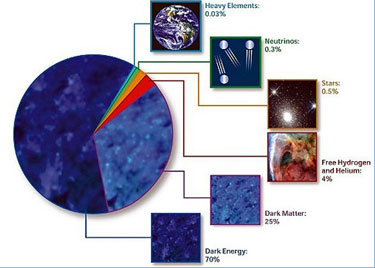
<p><img alt="universe.jpg" src="http://nopantsastronomy.cementhorizon.com/universe.jpg" width="375" height="268" /></p>

<p>What you're seeing here in this NASA chart is the composition of the universe (bearing in mind the duality of matter and energy -- E=mc^2, in case you ever wondered what that equation actually means).  Of the small portion of the universe comprised of visible matter, an extremely small percentage is comprised of stars, and a smaller still percentage is comprised of the heavy elements that make up planets.  This chart deals in composition rather than volume, but the message is similar: We're extremely small not only in terms of the space we take up relative to the total available space to be taken up, but also in terms of the percentage of the universe devoted to materials that make our lives at all possible.  Dig?</p>

<p>Bringing this exercise closer to home, we have this famous monologue from Carl "Billyouns and Billyouns" Sagan:</p>

<p><object width="425" height="355"><param name="movie" value="http://www.youtube.com/v/p86BPM1GV8M&rel=1"></param><param name="wmode" value="transparent"></param><embed src="http://www.youtube.com/v/p86BPM1GV8M&rel=1" type="application/x-shockwave-flash" wmode="transparent" width="425" height="355"></embed></object></p>

<p>I don't endorse all of the philosophical extrapolations in the video, but, again, you get the point: we are very, very small.</p>

<p>(I should add here that Bill Nye the Science Guy did a really cool demonstration on one of his shows in which he demonstrated the relative scales of the solar system by placing (very small) scale models of planets at their proper distances around a scaled-down sun.  The first few planets were relatively close -- though not as close as you might expect -- but the outer planets required vehicles to reach.  There's a re-creation of sorts available on YouTube that's altogether unwatchable.  I won't link to it here because I don't want you to blame me when you claw your eyeballs out.)</p>

<p>You can play this game with time, too, though unfortunately I don't have any visual aids.  The universe, so it's reckoned, is about 14 billion years old.  Earth has been around for about 4.5 billion years.  Humans (at least the ones on earth) have been around for 200,000 years.  Let's say a human life is about 100 years.  If the entire age of the universe were condensed into a single 24-hour day, the human race would have shown up at around 11:59:59 p.m.  A human would live for about six ten-thousandths of a second.</p>

<p>So, there you go.  Keep this in mind as we continue our tour of the freaky universe through out the week.</p>]]></description>
<dc:subject></dc:subject>
<dc:creator>hb</dc:creator>
<dc:date>2008-02-04T09:03:42-08:00</dc:date>
</item>
<item rdf:about="http://nopantsastronomy.cementhorizon.com/archives/2008/01/the_moon_a_nebu.html">
<title>The Moon, A Nebula, and a Not-a-Nebula</title>
<link>http://nopantsastronomy.cementhorizon.com/archives/2008/01/the_moon_a_nebu.html</link>
<description><![CDATA[<p>The weather finally let up, so I took the telescope out for a whirl this evening.  Tonight's stargazing qualifies as a success.

<p>First off, the Moon is back after a prolonged absence, so I was able to use it to align the viewfinder (the Moon is more than a mile away, fortunately), and give the Barlow lens and more powerful (10 mm) eyepiece a solid test run.  The Barlow lens doubles the magnification of whatever eyepiece you pair it with.  With the Barlow lens and the 10 mm eyepiece, the Moon was enormous.  Lots of detail, very sharp shadows, and craters I felt like I could touch.  Next time I'll look for the American flag.

<p>I was also able to finally spot the Orion Nebula, using the freshly aligned viewfinder.  Here the 10 mm eyepiece was less useful.  As I've mentioned before, the thing is so sensitive to ambient light that it's like looking through sunglasses.  I could tell that the nebula was better defined using the higher-powered eyepiece, but I just couldn't see it very well.  The Barlow lens with the weaker eyepiece, however, provided a great view of the nebula.

<p>I had intended to try and find the Andromeda Galaxy, but that didn't work out so well.  I was hoping I could use the R.A./Dec. coordinates from the astronomy software that came with the telescope, but unfortunately the R.A./Dec. dials on the telescope don't seem to bear any relation to the coordinates of whatever the scope is pointing at.  Very frustrating.  I'll have to either figure out how to get the dials to function properly (this probably involves aligning the telescope in a manner that's more complicated than what I've been doing) or use other means, perhaps the Space Navigator that my in-laws got me for Christmas.

<p>So, I didn't see any galaxies.  I did manage to get the scope pointed at the Pleides, and saw what appeared to be a nebula within the cluster.  At first I thought it may just have been some extra glow from a particularly bright star through the damp air, but the edges seemed to be well-defined, and I didn't see any similar glows on other bright stars (including Sirius, the brightest damn star in the sky, which was hanging low in the south).  It turns out, according to the Internet, that what I saw was not a nebula, but <a href="http://en.wikipedia.org/wiki/Pleiades#Reflection_nebulosity">reflection nebulosity</a> caused by the light from the star passing through interstellar dust.  Neat!

<p>Finally, I gave Mars another shot.  It's still just a small red dot, and it was even fainter this evening because it was right near the Moon, and the light from the Moon was washing out the glow of the planet.  I'm kind of done with Mars for this year.  According to my astro software, however, Saturn will be showing up in the east in a few hours.  I may stay up for that.
]]></description>
<dc:subject></dc:subject>
<dc:creator>hb</dc:creator>
<dc:date>2008-01-19T22:26:43-08:00</dc:date>
</item>
<item rdf:about="http://nopantsastronomy.cementhorizon.com/archives/2008/01/uncoordinated.html">
<title>Uncoordinated</title>
<link>http://nopantsastronomy.cementhorizon.com/archives/2008/01/uncoordinated.html</link>
<description><![CDATA[<p>The weather in the Bay Area this week was 100% pure ass, at least from a backyard astronomer's perspective (it was great if you like sitting inside, drinking beer, not wearing pants, and watching your cats get freaked out by thunder and lightning).  So, I don't have any stargazing adventures to report this week, so instead I'll provide a rant about Right Ascension / Declination telescope navigation.</p>

<p>Back when I was studying physics in college, one of the (many, many) things I had trouble with was <a href="http://en.wikipedia.org/wiki/Polar_coordinates">the polar coordinate system</a>, or any coordinate system other than <a href="http://en.wikipedia.org/wiki/Cartesian_coordinate_system">Cartesian coordinates</a>.  Don't ask me why, my brain just found it more intuitive to work in rectangular space.  Any situation requiring the use of spherical or cylindrical coordinates basically meant that I was starting at less than zero.

<p>I seem to be encountering the same mental block when it comes to using the mount on the new telescope, which operates on the <a href="http://en.wikipedia.org/wiki/Equatorial_coordinate_system">Right Ascension/Declination (R.A./Dec.) coordinate system</a>.  My previous, grossly malfunctioning telescope, used the <a href="http://en.wikipedia.org/wiki/Horizontal_coordinate_system">Altitude-Azimuth (Alt.-Az.) coordinate system</a>.  I realize that neither of these systems is Cartesian, but to my feeble, uninitiated mind, Alt.-Az. is a lot easier to use.

<p>Making adjustments on the Alt.-Az. mount was very simple.  The telescope swiveled on the horizontal plane (the azimuth), and on the vertical plane (the altitude).  It was therefore relatively simple to get the telescope pointing in a direction you wanted it to, since the movement was limited to up-down and left-right from the observer's perspective.

<p>The R.A./Dec. system is much more complicated, mainly because of the declination.  Right ascension functions similarly to azimuth, and is essentially a rotation along the horizontal plane (though not really, because the whole telescope is pointed slightly up depending on your latitude).  The declination, rather than being a simple rotation along the vertical plane, is more like turning a doorknob.  Adjustments in declination make the front of the telescope move in a circular motion.

<p>Now, I'm sure the R.A./Dec. coordinate system has its advantages, particularly among astronomical purists who might prefer a coordinate system tied to the immovable heavens rather than the capricious Earth.   I can accept that philosophical preference, and am even willing to entertain the notion that R.A./Dec. coordinates are easier to use.  Only here's the thing.  When you have an actual backyard telescope, the coordinate system is less important than being able to move the telescope in an intuitive manner.  The R.A. and Dec. dials on the telescope aren't that granular -- the tick marks are in multiples of two.  So when I look up the coordinates -- in either system -- of something I want to look at, the best I can do with the dials is get the scope pointed in the general neighborhood and then make adjustments visually.  This is a lot easier to do with a scope that moves left-right/up-down than left-right/clockwise-counterclockwise.

<p>So, to conclude, despite my fascination with the curvature of space, in my day to day existence I like to pretend I live in a rectangular world.  At present, my White Whale is the Orion Nebula.  If I can find that, R.A./Dec. be damned, I'll be satisfied with the new scope.

<p><br><br></p>]]></description>
<dc:subject></dc:subject>
<dc:creator>hb</dc:creator>
<dc:date>2008-01-13T21:12:26-08:00</dc:date>
</item>
<item rdf:about="http://nopantsastronomy.cementhorizon.com/archives/2008/01/jiggly_mars_1.html">
<title>Jiggly Mars</title>
<link>http://nopantsastronomy.cementhorizon.com/archives/2008/01/jiggly_mars_1.html</link>
<description><![CDATA[<p>Tuesday night was very, shall we say, <i>moist</i>, but I could still see quite a few stars and Mars was shining like it was about to fall out of the sky so I decided to take the scope out for another whirl.  I still haven't aligned the viewfinder, but I wanted to see if I could figure out how to use the freaky R.A./Dec. coordinate system on the mount.  More about that in another post.</p>

<p>I was able to find Mars with the telescope by setting the appropriate (or close enough) declination and then free-adjusting the right ascension until I saw an orange glare coming from just outside the field of vision.  I centered Mars in the eyepiece, and it looked like a tiny orange dot.  I set the R.A. and Dec. clamps and got out my <a href="http://en.wikipedia.org/wiki/Barlow_lens">Barlow lens</a> and the second eyepiece the guy at the telescope store insisted I have, which together should have increased the magnification of Mars considerably.

<p>The first thing I noticed is that, when you're observing a very small area of the sky through a telescope, things move fast.  In the time it took me to get the other lenses ready, Mars had drifted out of view.  This wasn't a big deal, since I was able to find it again using the fine adjustment knobs, but it was still neat to see.

<p>What was less neat was the view of Mars through the more powerful optical set up.  The image did appear bigger, but it was also incurably blurry.  No amount of fiddling with the focus knob seemed to help, since the orange dot was moving in steady, jiggly circles, apparently caused by some sort of vibration in the ground.  I'm not sure how to cure this, since I'd imagine the stupid tripod would correct for that.

<p>Hopefully big-gun optics will work better on larger objects, like Jupiter and Saturn, but we'll have to wait and see.
<br><br>]]></description>
<dc:subject></dc:subject>
<dc:creator>hb</dc:creator>
<dc:date>2008-01-06T12:18:33-08:00</dc:date>
</item>
<item rdf:about="http://nopantsastronomy.cementhorizon.com/archives/2007/12/spaaaaaaaaace.html">
<title>SPAAAAAAAAACE!</title>
<link>http://nopantsastronomy.cementhorizon.com/archives/2007/12/spaaaaaaaaace.html</link>
<description><![CDATA[<p>I know what you're thinking.  I'm just jumping on the <a href="http://www.astronomy2009.org/">International Year of Astronomy</a> bandwagon.  Yes, just like everyone else you know, I'm starting an astronomy blog just in time for 2008, when the UN will be doing its damnedest to get everyone interested in space.</p>

<p>Be that as it may, here I am.  Rather than crud up my other blog with posts about my ham-handed stargazing activities, I decided to start up this here sciencey blog, and the CH Big Mijefe was nice enough to give me a whole nother blog.

<p>I began my astronomy kick about six months ago, and clung to it long enough to realize that it wasn't just a passing fancy.  So, a few months later when I found myself with some money to burn, I decided, after much urging by Dr. M, to buy myself a telescope.  That telescope <a href="http://ifoughtthelaw.cementhorizon.com/archives/007157.html">didn't work out</a>, so after I returned it I bought this thing:

<p><img alt="telescope.JPG" src="http://nopantsastronomy.cementhorizon.com/telescope.JPG">

<p>Unlike the previous telescope, this one doesn't have an expensive and pointless onboard computer, and also doesn't have a motor (though I'll eventually have to buy one, it seems).  It's also <i>extremely heavy</i>, which makes lugging it from my second-floor apartment to the best viewing spot in the complex no mean feat.  Those white disk-looking things are counterweights to balance the scope, to give you an idea of how heavy and awkward the damn thing is.  I'm hoping this blog will inspire me to make the effort at least once a week, weather permitting, and assuming I don't throw out my back.

<p>Another fun feature of this scope is that the viewfinder is a good four inches from the tube, which means that I have to find an object at least a mile away in order to align the viewfinder (a close object would create <a href="http://en.wikipedia.org/wiki/Parallax">parallax</a> problems).  This has proven to be somewhat difficult in light of the fact that I'm surrounded by trees.  But the viewfinder is still much better than the viewfinder on the old telescope, because (1) it's installed properly and (2) it only has two positioning screws, rather than the impossibly complex array of six screws, one of which didn't work.  It's easier to think in two dimensions than six, trust me.

<p>But I'm still excited, and I'm convinced that once I get the scope up and running I'll finally be able to see some cool deep-space crap.

<p>In the meantime, happy Year of Astronomy.
<br><br>
]]></description>
<dc:subject></dc:subject>
<dc:creator>hb</dc:creator>
<dc:date>2007-12-31T20:03:37-08:00</dc:date>
</item>


</rdf:RDF>